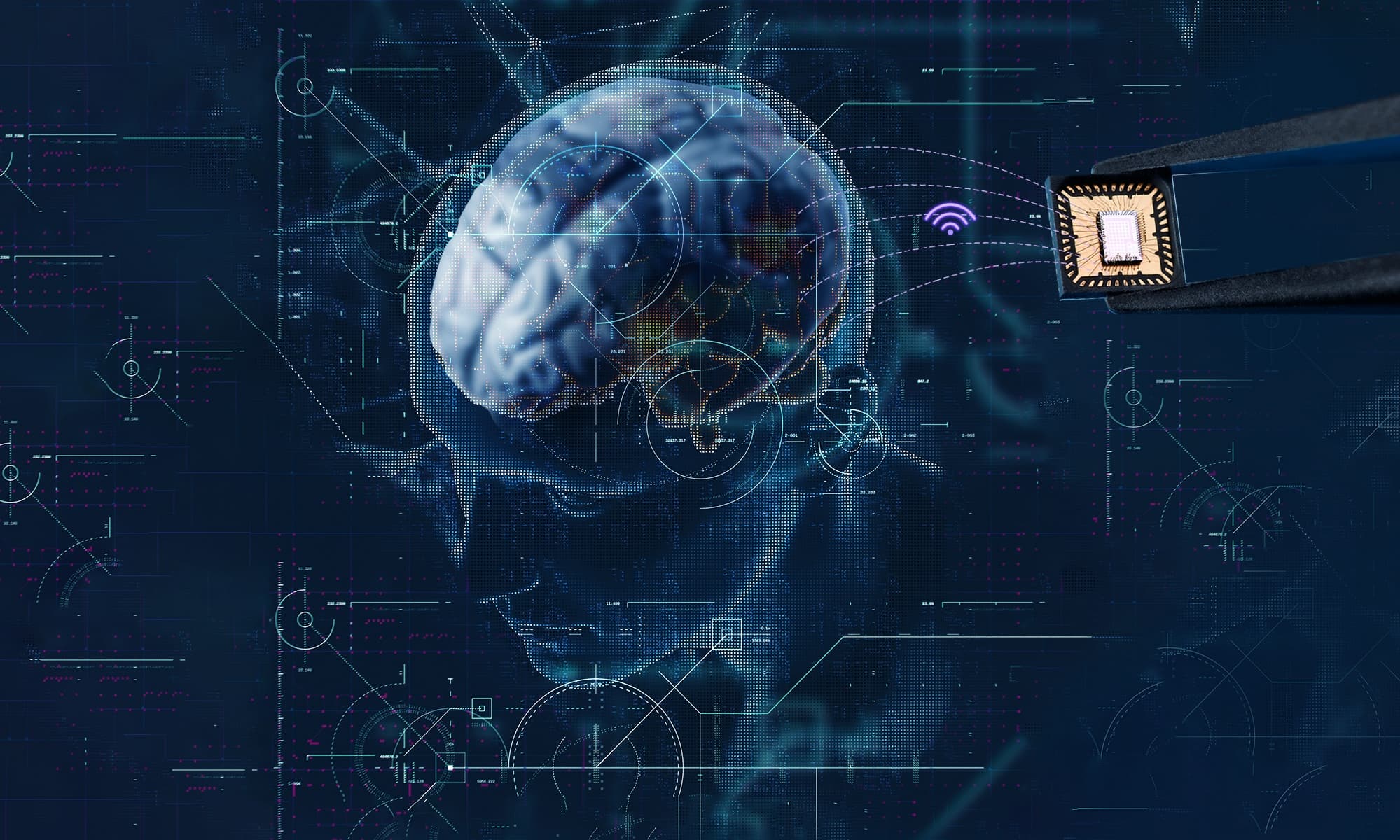
A recent technology feature in Nature describes the excitement among neuroscientists who are using imec’s Neuropixels probe in their labs.
Developed by imec in collaboration with leading neuroscience institutes, and fabricated using imec’s advanced CMOS manufacturing technology, they are now used in preclinical research and, more recently, in clinical intra-operative research.
The brain is an electrical system and the most complex object known to science. Its neurons communicate through tiny electrical pulses, yet our understanding of how it works at the cellular and circuit level remains profoundly limited.
Sensory functions like sight, hearing, and speech, and diseases like epilepsy, Parkinson’s, Alzheimer’s, depression, and schizophrenia, have different causes, but share one feature: they depend on how neurons connect and work together. Just as microscopy revealed the cellular abnormalities behind disease, recording single neurons exposes the activity, function, connectivity and circuit abnormalities behind it.
Imec’s Neuropixels probes make this possible, the highest-performing tool of its kind. Each probe is a tiny custom CMOS chip, with a shank as thin as a human hair carrying thousands of sensors. The ability to listen in on neurons one by one, across several brain regions at once, provides activity maps of brain function at the cellular and circuit level. Originally developed for preclinical research in animal models, they are now being used in humans, and have made large-scale recordings of individual neurons possible.
The first probes, Neuropixels 1.0 (Nature, 2017), had 1,000 electrodes on a single shank (the neural interface). Neuropixels 2.0 (Science, 2021) offers more than 5,000 electrodes across four shanks. Future devices, still in development, are expected to increase the number of recorded neurons by an additional 5-8x and will integrate features that enable light-based modulation and stimulation of cells (optogenetics) alongside electrical recording (Optogenetics was recognized by the 2026 Nobel Prize in Physiology or Medicine).
“For the first time in neuroscience history, neural recording density is beginning to follow a Moore’s Law-like scaling pattern, leveraging advanced scaled CMOS technology, including in human brains. Every new device generation will allow researchers to create larger and larger brain activity maps, and we are far from the end of that road,” notes Barun Dutta, chief scientist at imec.
- Read the full feature by Diana Kwon in Nature; "Meet Neuropixels: how probes that track hundreds of brain cells at once are revolutionizing neuroscience".
Meet us at SfN
Attending the Society for Neuroscience (SfN) Annual meeting in Washington, DC, starting November 14, 2026? Visit imec at booth #2737 to learn more about Neuropixels applications.

The Neuropixels 2.0 probe (bottom) is smaller than the first generation (top), and can monitor neural activity over weeks.
Neuropixels is the result of a long-standing collaboration. The probes are conceptualized, designed, developed and fabricated at imec, together with HHMI Janelia Research Campus, the Allen Institute, NTNU-Kavli and University College London. Funding comes from HHMI, The Wellcome Trust, the Gatsby Charitable Foundation, the NIH and the Allen Institute.
Related links:
- Our neurotechnology work: Neuroscience technology | imec
- IEEE Spectrum, Barun Dutta, Eavesdropping on the Brain With 10,000 Electrodes (2022): https://www.imec-int.com/en/articles/eavesdropping-brain-10000-electrodes
- Leonard, M.K., Gwilliams, L., Sellers, K.K. et al. Large-scale single-neuron speech sound encoding across the depth of human cortex. Nature 626, 593–602 (2024). https://doi.org/10.1038/s41586-023-06839-2